
 Emadlangeni Radio
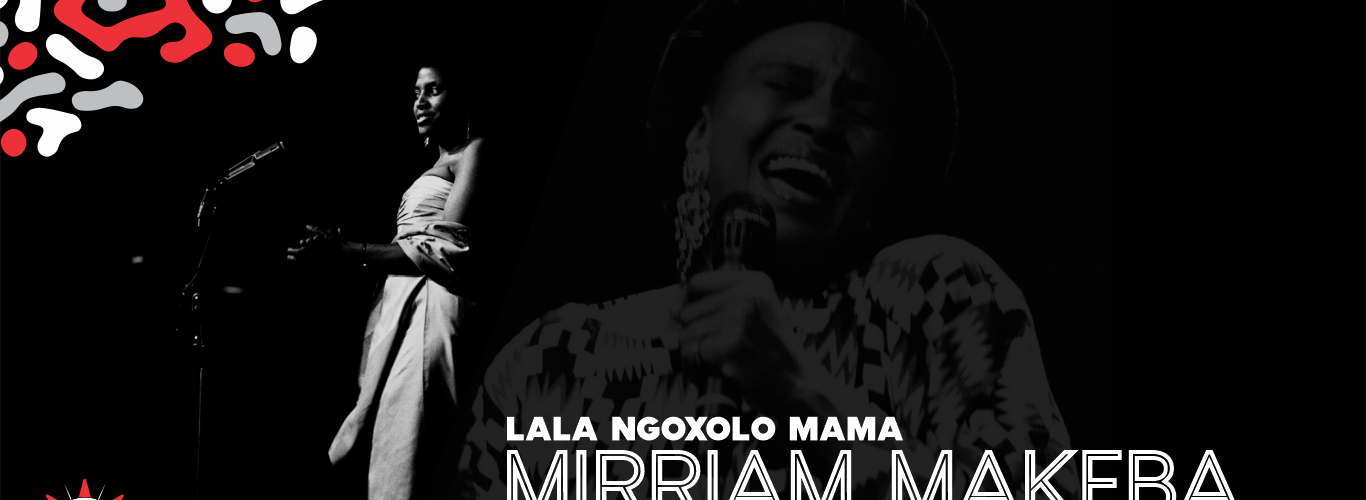
There are voices that entertain, and then there are voices that transform. Zenzile Miriam Makeba—affectionately and eternally known as Mama Africa—possessed a voice that did both. Born into a world that sought to silence people who looked like her, she sang anyway. Exiled from the land she loved, she carried it with her in every note. When she passed away on November 9, 2008, while performing in Italy, the world didn’t just lose a singer; it lost a freedom fighter, a cultural ambassador, and the mother of modern African music .
For Emadlangeni, a platform dedicated to celebrating the sounds of the diaspora, Makeba’s story is foundational. She is the thread that connects Johannesburg to New York, Guinea to the world.
The Making of a Voice (1932-1959)
Miriam Makeba was born on March 4, 1932, in Prospect Township, Johannesburg, to a Swazi mother and a Xhosa father . Her entry into the world was a prophecy of the struggle to come. Just eighteen days after her birth, her mother—arrested for brewing traditional beer to support the family—took baby Miriam with her to prison, where she spent the first six months of her life . It was a brutal introduction to the injustice of apartheid, but it was also the beginning of a life defined by resilience.

Music found her early. She sang in the choir at the Kilnerton Training Institute in Pretoria, learning to blend English hymns with Xhosa, Sotho, and Zulu melodies . By the 1950s, she was performing professionally, first with the Cuban Brothers, then with the Manhattan Brothers, and eventually forming the all-woman group The Skylarks . Her voice—clear, powerful, and achingly beautiful—quickly became a staple in South African townships.
In 1959, two events changed everything. She was cast in the lead female role in the groundbreaking South African jazz opera King Kong, performing alongside a young Hugh Masekela . That same year, she made a brief but unforgettable appearance in the anti-apartheid documentary Come Back, Africa. The film was invited to the Venice Film Festival, and Makeba traveled to Italy to attend . She would not see her homeland again for 31 years.
Exile and Global Stardom (1959-1990)
While Makeba was in Venice, the South African government revoked her passport. She was a woman without a country—not because she had committed a crime, but because her voice had exposed the crime of apartheid to the world .
From London, she traveled to New York, where she was embraced by Harry Belafonte, who became her mentor and close collaborator . In America, Makeba became an overnight sensation. She performed at President John F. Kennedy’s birthday party at Madison Square Garden in 1962 and testified before the United Nations against apartheid in 1963—a testimony so powerful that the South African government responded by banning her records and formally revoking her citizenship .
In 1965, she and Belafonte won a Grammy Award for An Evening with Belafonte/Makeba, making her the first African musician to receive the honor . In 1967, she released her most famous song, “Pata Pata.” The track, which she had originally written and performed with the Skylarks in 1959, became a worldwide hit, introducing the world to the click sounds of the Xhosa language and the infectious joy of South African rhythm .
Makeba often said she wasn’t a political singer—she was simply a singer singing about her life. But in apartheid South Africa, living openly and celebrating Black beauty was inherently political. Her natural hair, her refusal to wear makeup or skin lighteners, and her proud African stage presence became a style revolution, inspiring the “Afro look” that swept through the Black diaspora .
In 1968, she married Stokely Carmichael, a leading figure in the Black Panther Party. The backlash was immediate and severe. Her bookings in the United States dried up, and her record deals evaporated . Forced into a second exile, she and Carmichael moved to Guinea, where President Ahmed Sékou Touré welcomed them as citizens and ambassadors of Pan-Africanism .
Voice of the Struggle
In Guinea, Makeba’s voice grew even sharper. She performed across Africa, Europe, and South America, using every stage to demand freedom for her homeland. She addressed the United Nations General Assembly twice as a Guinean delegate, and in 1977, she recorded “Soweto Blues“—a haunting elegy written by her former husband Hugh Masekela about the 1976 Soweto Uprising . The song remains one of the most powerful musical condemnations of apartheid ever recorded.
The 1980s brought profound personal pain: her daughter Bongi Makeba—herself a talented singer and songwriter who composed liberation anthems like “A Luta Continua“—passed away tragically in 1985 . Miriam battled her own health struggles, including cervical cancer, but she never stopped singing .
The Long Walk Home (1990-2008)
In 1990, Nelson Mandela was released from prison. One of his first acts as a free man was to personally encourage Miriam Makeba to return to South Africa . After three decades in exile, she came home. The woman who had been stripped of her citizenship was welcomed as a national treasure and a heroine of the liberation struggle .
She continued to record and perform well into her 70s. In 1999, Mandela presented her with the Presidential Award . She was named a FAO Goodwill Ambassador and continued her humanitarian work through the Miriam Makeba Centre for Girls, a refuge for abused young women in Midrand, Johannesburg .
On the night of November 9, 2008, Miriam Makeba took the stage in Castel Volturno, Italy, for a concert in support of the writer Roberto Saviano. Despite feeling unwell, she performed for 30 minutes. Moments after leaving the stage, she suffered a fatal heart attack . She died as she had lived—with a song on her lips and Africa in her heart.
The Legacy That Sings On
More than a decade after her passing, Miriam Makeba’s legacy continues to resonate. She taught the world that African music was not a novelty but a profound art form. She proved that an artist could be both commercially successful and unapologetically political. She showed generations of African women—from Angelique Kidjo to Thandiswa Mazwai to Simphiwe Dana—that their voices matter .
In 2025, the Thabo Mbeki African School of Public and International Affairs at Unisa hosted the Third Annual Miriam Makeba Memorial Lecture, celebrating her contributions to cultural diplomacy, Pan-Africanism, and social justice . As speaker Faith Isiakpere, who traveled with Makeba for four decades, reminded the audience: “Mazi showed me what it was like to be an African” .
Miriam Makeba once said: “I kept my culture. I kept the music of my roots. Through my music I became this voice and image of Africa and the people without even realising” .
At Emadlangeni Online Radio & Podcast, we are honored to carry that voice forward. Mama Africa, your song is eternal. Hamba kahle, Mama.
What does Miriam Makeba’s music mean to you? Share your memories and tributes in the comments or send us a voice note. We would love to hear how Mama Africa touched your life.




Add comment