
 Emadlangeni Radio
(1947 – 2017)
A giant has fallen, but his music will never die.
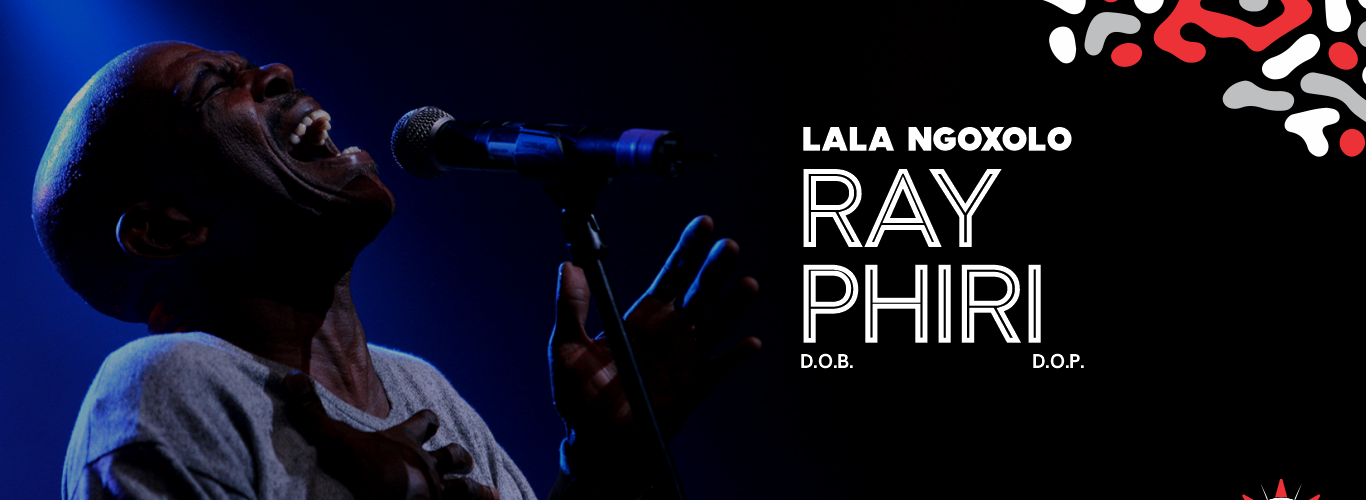
Today we pause to remember and celebrate the life of one of South Africa’s greatest musical sons—the legendary Ray Chikapa Phiri—who left us on this day in 2017.
Born in Nelspruit in 1947, Ray Phiri was more than a musician. He was a storyteller. A freedom fighter with a guitar. A man whose fingers danced across strings to give voice to a nation.
The Sound of a Generation
With his band Stimela—”The Steam Train”—Ray took us on journeys we never wanted to end. Albums like Fire, Passion and Ecstasy and Look, Listen and Decide weren’t just records; they were soundtracks to our lives. Who among us didn’t feel the soul of “Whispers in the Deep” or find strength in “Singajindi Majita”?
His unique Afro-fusion—that beautiful blend of jazz, mbaqanga, and reggae—created a sound that was unmistakably South African, yet resonated with the whole world.
The Graceland Chapter
The world took notice when Paul Simon came calling. Ray’s guitar work on the Graceland album introduced township music to global audiences, and when he took that stage at Madison Square Garden, he carried every South African with him. But let’s be clear—Ray was no mere collaborator. He was a maestro who used that platform to sensitize the world to the pain and hope of our struggle.
Art That Mattered
The apartheid regime banned his music. Why? Because his songs told the truth. Because “Highland Drifter” and other anthems refused to be silent. Ray understood that art could be a weapon—not of violence, but of truth.
When he received the Order of the Ikhamanga in 2011, it wasn’t just an award. It was South Africa saying “thank you” to a man who never stopped believing in her.
The Legacy Lives On
Ray Chikapa Phiri believed in the next generation. Through the Ray Phiri Artists Institute, he poured into young talent, ensuring the fire would keep burning. His advice to his own son says it all:
“Make sure that your art outlives you. Make music that matters.”
Baba Ray, you did exactly that.
Though you endured personal pain—losing band members in that terrible crash, and later your beloved wife Daphney—you kept creating, kept inspiring, kept giving.
Today your hands may be still, but your music still thunders through our speakers, our memories, our hearts. Stimela may have left the station, but the whistle will echo forever.
HIS LIFE
Raymond “Ray” Chikapa Phiri was a legendary South African musician, composer, and anti-apartheid activist whose influence spanned decades . Born on March 23, 1947, in Nelspruit (now Mbombela), Mpumalanga, he passed away on July 12, 2017, at the age of 70 after a battle with lung cancer .
Here is a profile of his remarkable life and career.
 A Musical Journey: From The Cannibals to Stimela
Ray Phiri’s musical journey began in his youth, inspired by his stepfather, a guitarist nicknamed “Just Now” Phiri . He started his professional career in the late 1960s and, in the 1970s, became a founding member of the soul group The Cannibals . However, his most significant impact came after the band dissolved, when he founded the group Stimela (which means “steam train”) .
With Stimela, Phiri created a unique sound, masterfully blending genres like jazz, fusion, mbaqanga, and reggae to create what many call “Afro-fusion” . The band became a powerhouse in the South African music scene, producing gold and platinum-selling albums such as :
- Fire, Passion and Ecstasy (1984)
- Look, Listen and Decide (1986)
- Trouble in the Land of Plenty (1989)
 International Acclaim and the Graceland Collaboration
Ray Phiri’s talent caught the attention of American singer-songwriter Paul Simon in 1985. Simon invited Phiri, his band Stimela, and Ladysmith Black Mambazo to collaborate on the iconic album Graceland (1986) . Phiri’s intricate guitar work and musical direction were central to the album’s distinctive sound, which introduced South African township music to a massive global audience .
The album was a massive commercial and critical success, winning the Grammy for Album of the Year in 1988 . Phiri also joined Simon for the subsequent world tour, performing on major stages like Madison Square Garden . He later described the collaboration as a strategic cultural exchange that helped sensitize the world to the anti-apartheid struggle .
Despite the success, Phiri later expressed some “bad blood” over songwriting credits and royalties, feeling his contributions were not fully recognized . Nevertheless, he reconciled with Simon enough to participate in the Graceland 25th-anniversary tour in 2012 .
 Art as a Weapon Against Apartheid
Beyond entertainment, Phiri’s music was a powerful tool for social commentary and resistance. He was acutely conscious of the socio-political conditions in South Africa . His politically charged songs provided a voice for the oppressed and became anthems of the anti-apartheid movement . Songs like “Whispers in the Deep” and “Highland Drifter” were so effective in their critique that they were banned by the apartheid regime . His track “Singajindi Majita” carried a message of perseverance, urging people not to give up .
 Legacy and Honors
Ray Phiri’s immense contribution to music and social justice has been recognized with numerous prestigious awards, including:
- The Order of Ikhamanga in Silver (2011), awarded by the President of South Africa for his outstanding contribution to the music industry and social transformation .
- A South African Music Lifetime Achievement Award (2012) .
- A posthumous Doctor of Philosophy in Music (Honoris Causa) from the University of South Africa (2024), acknowledging his “singular accomplishments in music” .
He was also a dedicated arts activist, serving on the board of the National Arts Council and founding the Ray Phiri Artists Institute in Mpumalanga to nurture young talent .
 Personal Life
Ray Phiri’s life was marked by both triumph and deep personal tragedy. He was the son of a Malawian immigrant worker and was one of eight children . He was a family man with three sons and five daughters . His life was affected by a series of car accidents; he was severely injured in a 1987 crash that killed several band members, and in 2003, he survived another accident that tragically claimed the life of his wife, Daphney .
His son, Akhona Phiri, once shared that despite only having a grade 9 formal education, Ray was exceptionally intelligent and an avid reader who instilled a love of learning in his children . His advice to his son was to “make sure that your art outlives you. Make music that matters.” .
I hope this profile gives you a comprehensive picture of the life and legacy of Ray Chikapa Phiri. Is there a particular aspect of his career or his music you would like to explore further?
Rest well, Chikapa. Hamba kahle, Mkhonto. Your journey was not in vain.
 What’s your favorite Ray Phiri or Stimela memory? Share it below so we can celebrate this legend together.
“Music is a weapon of the struggle. But it is also a weapon of joy.” — Ray Phiri





This is why i\’d rather have a green and red scarf. Next to keeping my scarfs in-house I keep them in separate house. Unfortunately I can wear them only when its winter – summer is bit warm for scarfs 🙂
I hope that you agree with me
I agree with you – I also keep my scarves in one special place. I wear them only when its winter and winters here can be vary vary cold.
I change my set of scarves every year. Sometimes it costs me a lot of money but when scarves are in question I simply just don\’t care.
I will share this article on all my social networks – you can follow me there Patrick.